
Plot Twist: Your Customer Didn't Google It.
.. because someone else made the shortlist.

Your target audience probably aren’t looking your brand up on Google anymore.
Instead, they’re lying awake at 1:37AM, asking ChatGPT what to buy and building an entire shortlist from a single response.
And not just ChatGPT.
Perplexity. Gemini. Claude. All of them.
AI is becoming a major part of product discovery, and is drastically modifying the buying journey too.
Before a potential customer even reaches your site, AI now narrows down thousands of options and presents a handful of brands to them.
So the question is no longer just: ‘Which product should I buy?’
It’s: ‘Which brands did AI decide were worth showing me?’
And that alone changes far more than just where the click came from.
It’s a rewire of the entire buying journey.
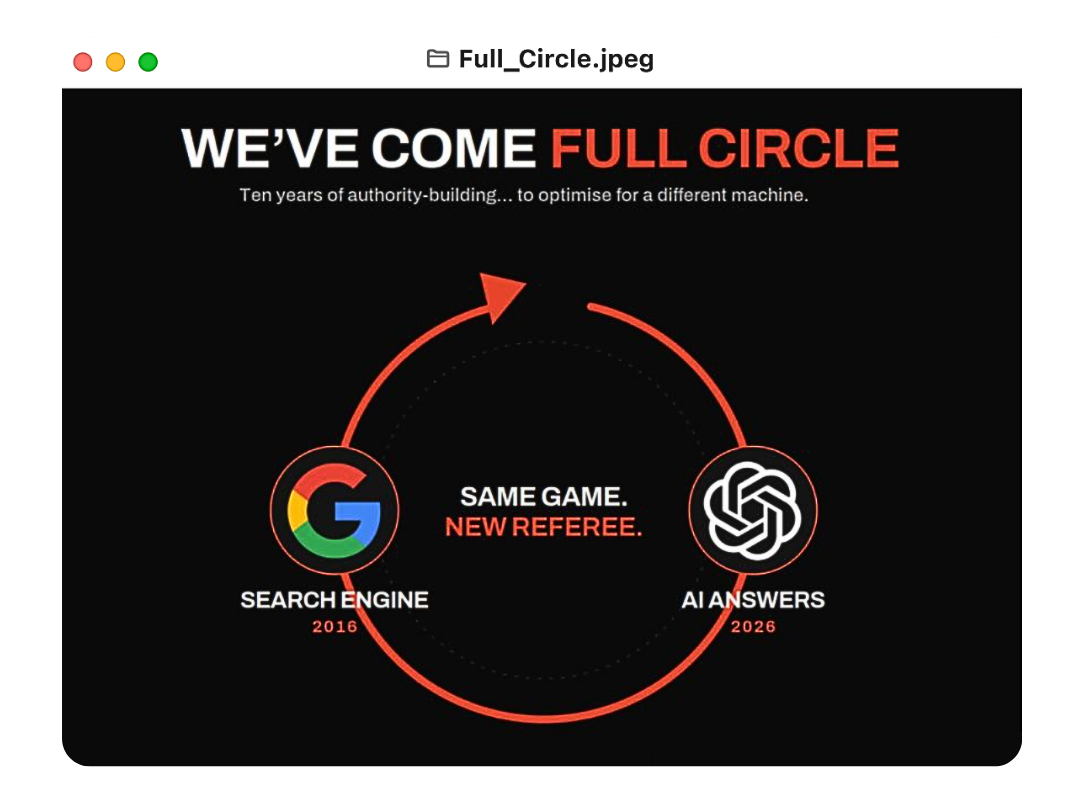
But AI isn’t replacing trust.
The open loop here is that AI might introduce someone to a product, but it rarely closes the sale on its own.
Because even once people have a recommendation, they’re still looking for reassurance before hitting ‘add to cart.’
They’re watching YouTube, scrolling Tiktok, visiting trusted content publisher sites, and looking for creator opinions that they trust.
The crux of the research is simply to understand: ‘Do REAL people actually rate this?’
So it’d be wrong to assume that AI is replacing human influence. If anything, it’s just reorganising it.
The buying journey went from: Search. Website. Purchase.
To: AI provides discovery. Humans validate it. Customers buy.
And that’s a journey most brands still aren’t measuring properly.
Because Attribution Is Still Stuck in 2019.
Traditional attribution was built for a different type of internet.
Someone clicked an article, visited your site, and bought the product. Everyone could clearly tell who influenced the sale.
Simple enough, right?
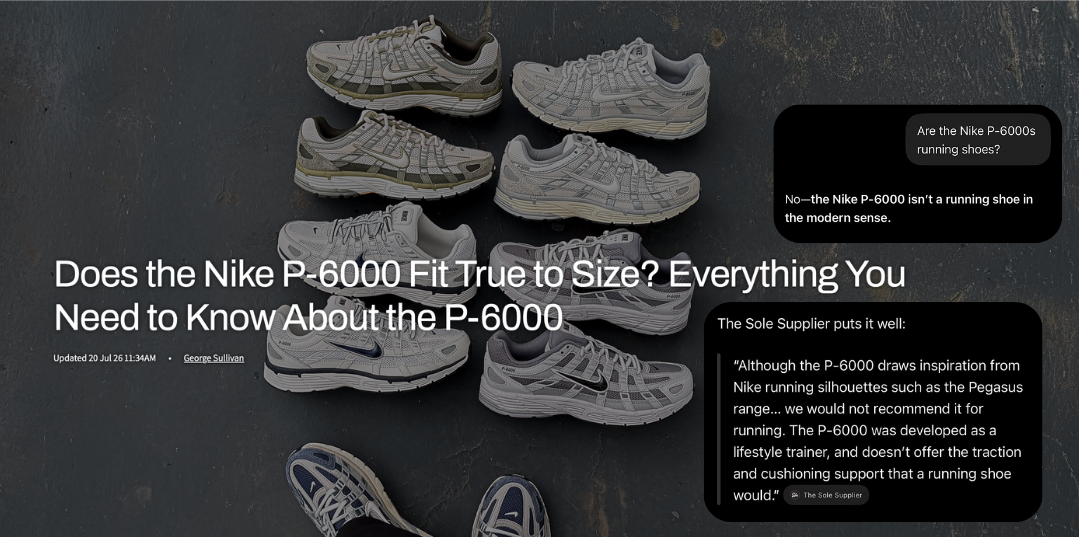
But today, it’s starting to look like:
A customer asks ChatGPT how the Nike P-6000s fit, and whether they’re appropriate to be used as a running shoe.
ChatGPT builds its answer using creator content, publisher articles, and community discussions.
Customer then validates with content creators, publishers, and real humans - think YT, Tiktok, and editorial articles like The Sole Supplier ones.
The customer then visits the brand directly and makes the purchase.
Analytics record it as a direct conversion.
The influence happened, but the attribution didn’t.
Which speaks to how we’re entering an era of clickless influence.
Good content is still driving buying decisions, it’s just not directly being attributed to the click.
Our Firsthand Experience of Clickless Influence
Over a number of weeks, The Sole Supplier produced 37 pieces of content across multiple formats for the brand Merrell.
Direct attribution showed only about 50 sales.
Looking at that figure alone, you’d probably have questioned whether the campaign had worked or not.
But that wasn’t the only outcome.
That campaign drove a 400% uplift in sales for the particular sneaker we worked on.
People searched for the brand later, visited through different routes, then bought.
The content clearly influenced the purchase, but traditional attribution simply couldn’t connect every dot.
The misconception that AI makes content replaceable
I 100% believe the opposite is true.
Because think about it: AI isn’t some genius inventing the wheel.
It’s just a really fast researcher - it looks for the most credible things humans have already created, and then builds its answer from there.
Which means, no trusted content = no recommendation.
So what should brands do differently?
Brands need to start thinking in ecosystems instead of one off campaigns.
One creator post rarely changes a business.
Neither does one article, or one tiktok.
People buy only after seeing the brand in multiple trusted places.
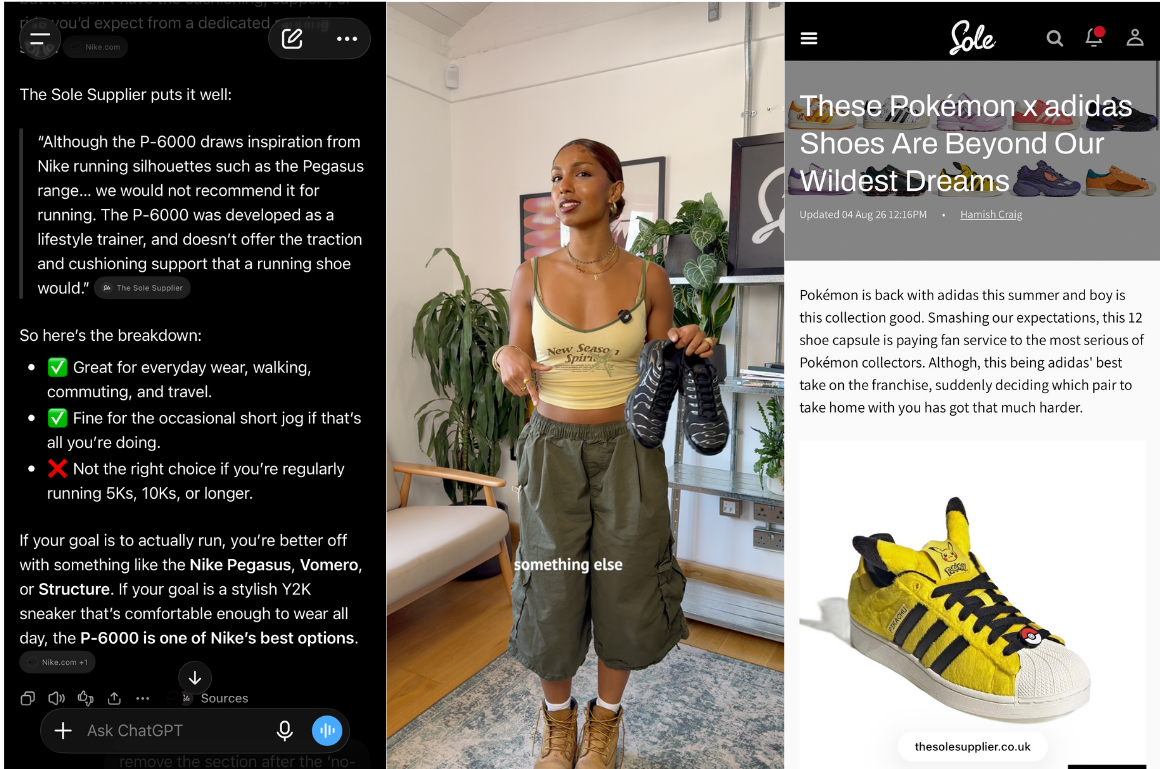
AI recommends it, a creator validates it, a publisher features it in their editorials, it’s repeated on content partner socials.
THAT is how trust compounds.
It’s why long term content partnerships outperform individual campaigns.
And it’s also why content publishers matter more now.
Solid content from the right sources has become one of the biggest competitive advantages in an AI-driven world.
The buyer journey hasn’t necessarily become shorter, it’s just become harder to see.
Customers are still discovering brands, still looking for reassurance, still buying from people.
The difference now is that AI sits at the very beginning of that journey.
The brands that understand that shift will be the ones getting recommended more often, and also the ones that both humans and AI will trust.
For a deeper understanding of which content AI loves and how your brand can pop up in AI discovery, you can download The Sole Supplier’s latest breakthrough report ->> https://forms.gle/1DT5tA5bJSYTcmdV8